Mostrando entradas con la etiqueta Bilingüe. Mostrar todas las entradas

miércoles, 15 de abril de 2026

 ARTE Y CIENCIA SE UNEN EN LA ELABORACIÓN DE JABONES NATURALES

    El alumnado de 4º de ESO ha participado en una actividad interdisciplinar en la que han colaborado los departamentos de Física y Química y Artes Plásticas (Expresión Artística y sección Bilingüe). 

    La primera parte del proyecto se desarrolló en el laboratorio de física, donde el alumnado elaboró jabón casero siguiendo el proceso de saponificación, aprendiendo también las medidas de seguridad necesarias. Durante las semanas siguientes, se ha realizado un seguimiento de la evolución y curación del jabón. 

    En el aula de Expresión Artística, el trabajo continuó con el diseño y creación de un packaging artesanal, dibujado a mano, fotocopiado y coloreado individualmente, potenciando la creatividad y el cuidado por los detalles. 

    Como cierre de la actividad, cada pastilla de jabón fue envuelta en papel de seda e introducida en su caja personalizada. Además, se hizo entrega de un jabón a cada miembro del claustro, al personal del centro y al alumnado participante como muestra del trabajo realizado. 

    Una experiencia que une arte, ciencia, idiomas y sostenibilidad, y que ha permitido al alumnado aprender haciendo.


jueves, 27 de abril de 2017

2º BILINGÜE: JUMP ROPE

Los alumnos de 2º bilingüe realizaron esta divertida actividad, de comba en clase de Educación física. Podéis ver en las entrevistas posteriores, con Elisabeth, su dominio que del inglés.


Para ver el vídeo en nuestro canal de Youtube pincha aquí.

jueves, 2 de marzo de 2017

Trappist-1, here we go!

Students of 1st ESO bilingual read this article about Trappist-1 and they wrote the following reports with their awesome conclusions.

A NEW DISCOVERY


The astronomers discovered seven Earth-sized planets found orbiting nearby a star. The astronomers of NASA discovered these seven planets. The name of the star that these planets orbit is Trappist-1. They are 39 light years away from the Earth (so we would last 39 years to arrive there if we could travel to the speed of light)

We can travel to that system. Because if we put in he rocket a woman and a man older than 20 years and a boy and a girl 5 years old. The boy and the girl grow in the rocket and when the are adults thy make a baby and this process repeats and they can arrive to Trappist-1 planets.

Trappist-1 has planets in the habitable zone, this means that it has planets in an area that they can have water in the three states and a good temperature for life to develop. Scientists think that there could be life there because it is in a zone that has all the conditions for water to exist.
Inés Lobato
Hugo Gutierrez
Abel García
Lucía Armesto

TRAPPIST-1: AN IMPORTANT DISCOVERY


Do you think there isn't life in other planets? You probably are wrong, because the NASA found a Solar System with planets like the Earth.

Scientist of the NASA discovered that on Thursday 23rd of February of 2017.

The name of the star is Trappist-1 and we can´t travel to it because is 39 light years away from here, but if the science advances in that point we can travel in the future.

It has got 3 planets in the habitable zone, an habitable zone is the zone where the life could exist because there could be water in three states. 
Raquel Alba
Helena Muñoz
Leslie García
Gabriel López

Resultado de imagen de hola trappist-1

jueves, 26 de enero de 2017

STRUCTURE OF THE ATMOSPHERE

ESTRUCTURA DE LA ATMÓSFERA/
STRUCTURE OF THE ATMOSPHERE
by 1º Bilingüe


Archivo_000.jpeg


Toda la clase de 1º bilingüe hemos hecho este trabajo en Biología y Geología, pero el de la foto superior es de Inés Lobato. Trata sobre el tema que estamos dando, la atmósfera. Debajo del dibujo de cada capa, está la descripción en inglés, como podéis ver en las fotos.

Archivo_001.jpeg Archivo_002.jpeg


All the students made this work, but the one of the photos above, was made by Inés Lobato. It’s about the unit that we are studying , the atmosphere. Under the drawings is the description in English of each layer.


Archivo_005.jpeg
Aquí podéis ver el resto de los trabajos, están realmente bien/Here you can see the works of the rest of the students. They are really good.

Escrito por/ Written by Raquel Alba & Gabriel López

viernes, 20 de enero de 2017

Ultima hora en el laboratorio/Breaking news in the lab.

ÚLTIMA HORA EN EL LABORATORIO/ 
BREAKING NEWS IN THE LAB


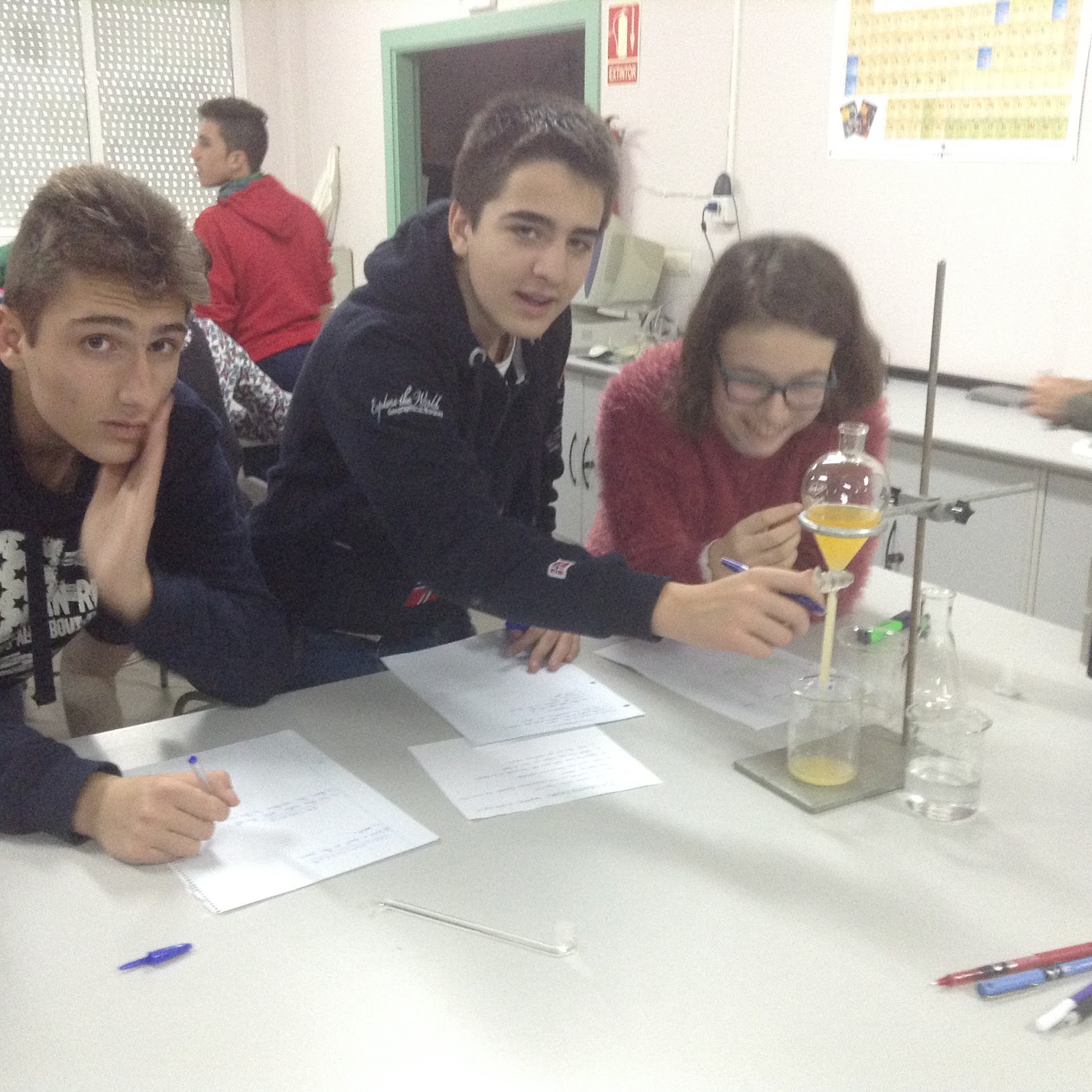
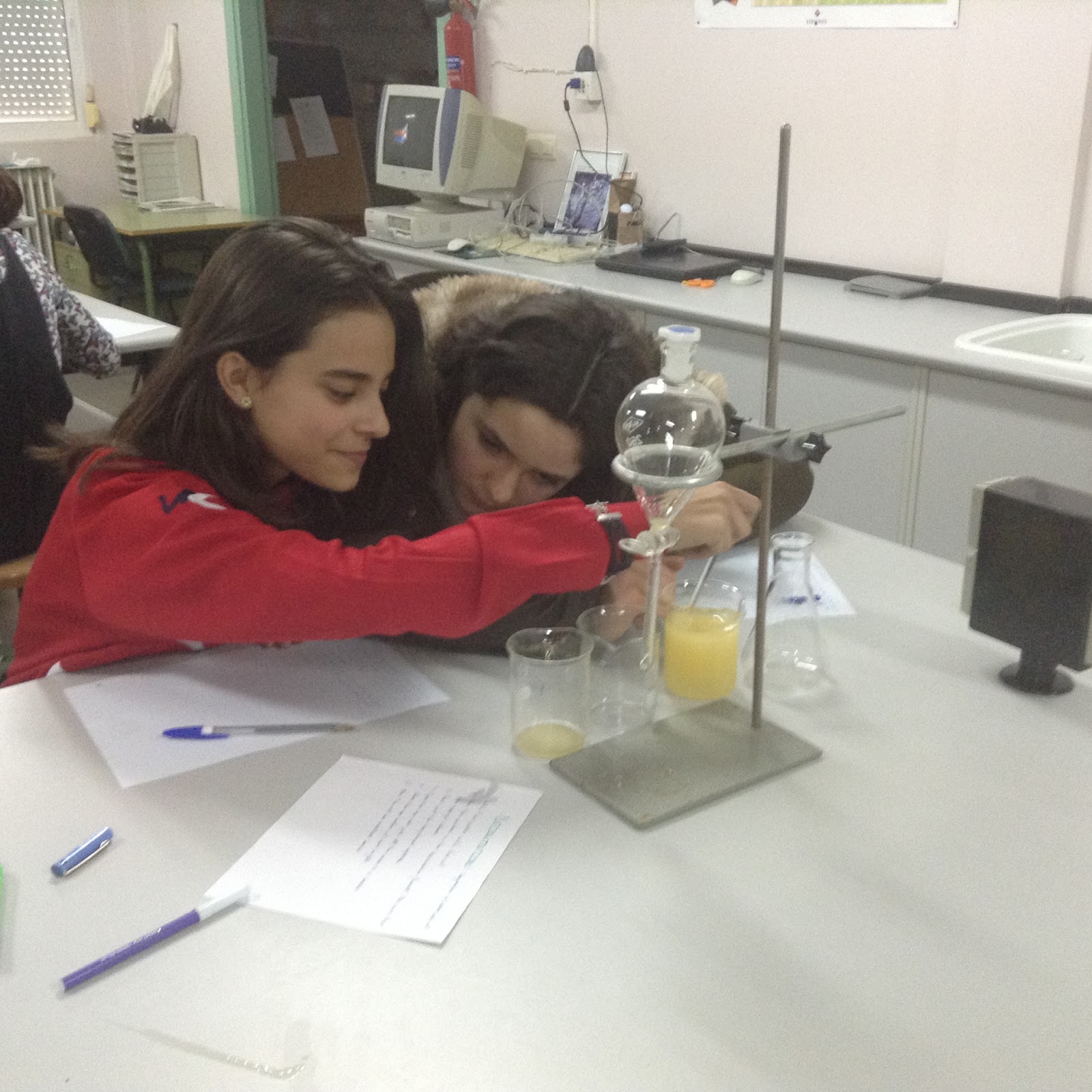
El pasado lunes, alumnos y alumnas de 2º bilingüe, estuvimos en el laboratorio de física y química, separando mezclas.

Usamos muchos métodos diferentes para conseguirlo. Ejemplos de esto son:
Cromatografía, separación magnética, decantación, cristalización…

Estuvimos con Elisabeth, una joven que ha venido al instituto desde Arizona para acompañarnos este trimestre.

Nos dividimos en 5 grupos de 2 o 3 personas e hicimos un recorrido por las diferentes mesas, donde estaban los materiales necesarios para cada experimento.
 
Es nuestra segunda vez en el laboratorio, ya que la primera fue para practicar con volúmenes y densidades.

Archivo_001.jpegArchivo_003.jpeg
Decantation/Decantación
-------------------


On monday, the students of 2nd bilingual, were in the Physics and Chemistry laboratory, separating mixtures.

We use many different methods to practice, separating them. Such as:
Chromatography, magnetic separation, decantation, crystallization …
 
We were with Elizabeth, a young girl from Arizona. She is teaching in the high school because she’s going to stay with us for one term.
 
We divided into 5 groups of 2 or 3 people and did a rotation for the different stations, where the materials that we would need for every experiment were.

It’s our second time in the laboratory, because the first was for practicing with volumes and densities.

Archivo_000.jpegArchivo_004.jpeg
Cristallisation/cristalización


Archivo_002.jpeg
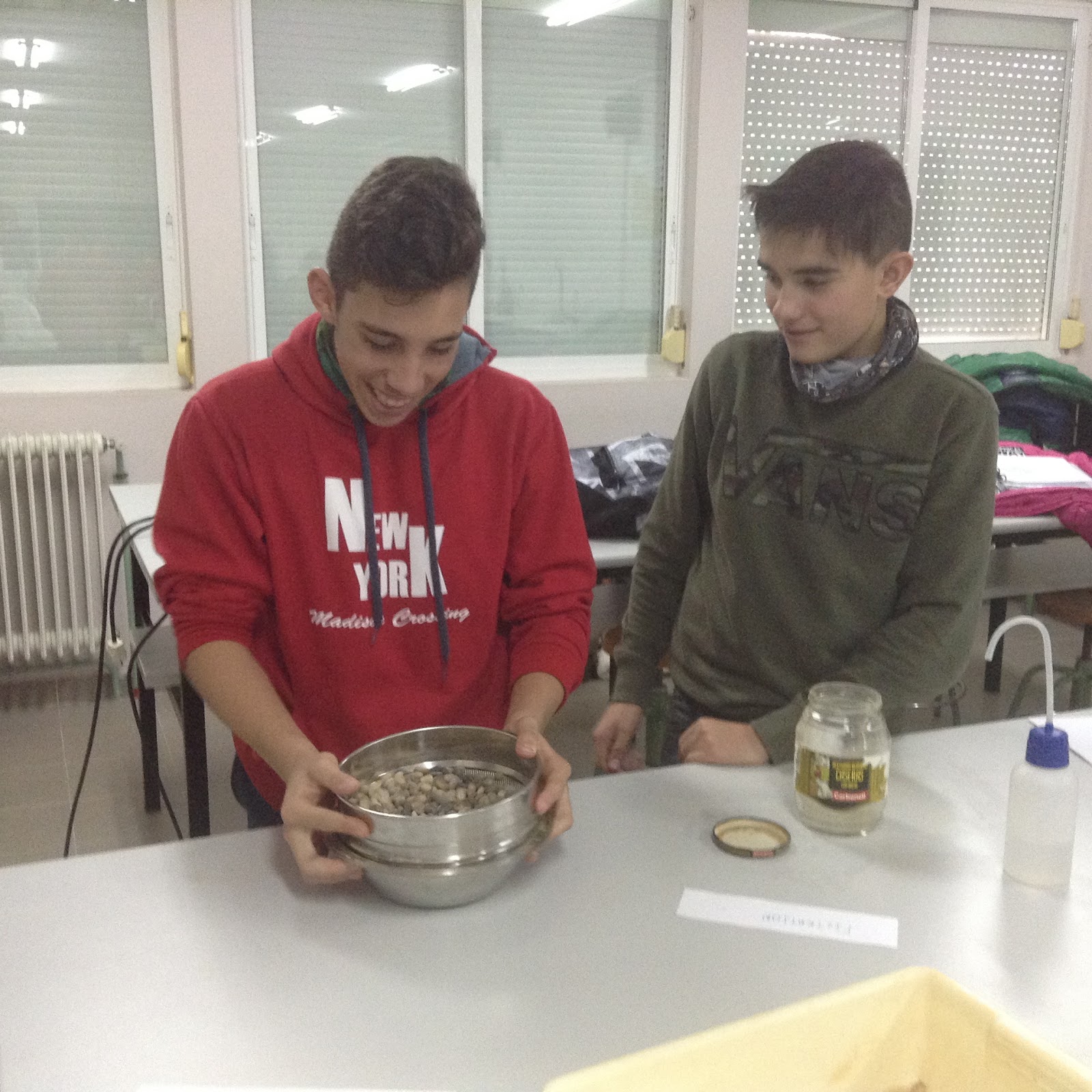
Sieving/tamizado


Escrito por/ written by: María Alonso e Irene de Castro (2º Bilingüe)

viernes, 3 de junio de 2016

PRESENTACIÓN DEL PROGRAMA DE INFORMACIÓN AL PEREGRINO


El pasado miércoles, 25 de mayo, Noelia Alonso, Profesora Técnico de Servicios a la Comunidad y Juan Carlos de Miguel, director del IES Bergidum Flavium, presentaron en el MARCA, junto al Alcalde, la Concejala de Educación y  la directora del Museo Arqueológico de Cacabelos nuestro Programa de Información al Peregrino (PiP).
Este proyecto para la práctica y el dominio de la lengua inglesa y francesa de nuestro alumnado a través del servicio de información turística a las personas peregrinas que visitan nuestro municipio, se hace realidad gracias a la colaboración conjunta entre el Ayuntamiento de Cacabelos a través de la Concejalía de Acción Social, Participación y Educación de Cacabelos y nuestro Instituto.

Para ello, se utilizarán dos espacios públicos del Ayuntamiento, el Albergue de Personas Peregrinas y el MARCA, Museo Arqueológico de Cacabelos, punto municipal de información turística. Nuestros alumnos, siempre acompañados por un técnico municipal, ejecutarán un programa formativo elaborado por el Equipo Docente del Instituto con el que practicarán las lenguas inglesa y francesa informando a la persona peregrina (sobre el mapa) de lugares de interés en la Villa (comercios, centro de salud, farmacias, servicios).

La duración del Programa este año será  coincidente con el periodo de apertura del Albergue Municipal de Personas Peregrinas, hasta el 31 de octubre de 2016. Los alumnos que participan en este programa deben estar matriculados en los cursos 4º de ESO, 1º ó 2º de Bachillerato en el Instituto "Bergidum Flavium" de Cacabelos. Hasta este momento se han apuntado 21 alumnos y alumnas desde 4º ESO hasta 2º Bachillerato. Estamos seguros que será todo un éxito


sábado, 31 de octubre de 2015

Crónicas bilingües de la Masterclass de Zumba y Aeroboxing

Nuestros alumn@s de la sección bilingüe de 1º ESO, han decidido hacer unas crónicas sobre las dos actividades complementarias desarrolladas hace unos días en el pabellón polideportivo de Cacabelos. Este es el resultado...y sus opiniones (en ingles, por supuesto)....

ZUMBA
The workshop of zumba was very interesting, funny and very very cool! Junior danced really great. A lot of people were dancing at the same time on the court.
We found some values in this activity:
FIRST: It was very interesting, and I passed over the embarrassment that I initially felt because I danced with my best friends, and they are very funny.
SECOND: Zumba is great!!!! I love it because it is very funny and at the same time it is useful to develop your physical fitness. I danced all the time and I got really tired!
THIRD: I loved it , I danced with my friends and we laughed a lot . As I said before, it was very funny and interesting for most of us.
By Clara, Irene and Noa 1º ESO